
Basic concepts related to financial statements
The four major statements of the financial statements are: balance sheet, profit and loss statement, cash flow statement, and profit and loss statement of changes. Generally, financial statements should be presented on an accrual basis, not on a cash basis, and new startups are reminded to pay special attention when preparing their financial statements.
Three-step concept of budget management
Before moving on to how to make an annual financial budget, the new three-step concept of budget management should be created: Planning, Budgeting, and Forecasting.
A plan is a start-up that decides which direction the next team and the founders want the company to take in the next phase. Budget refers to the way in which the team and the founders will bring the company to the goals set at the planning stage. The prediction is whether the actual implementation process of the team and the founders will be as originally conceived.
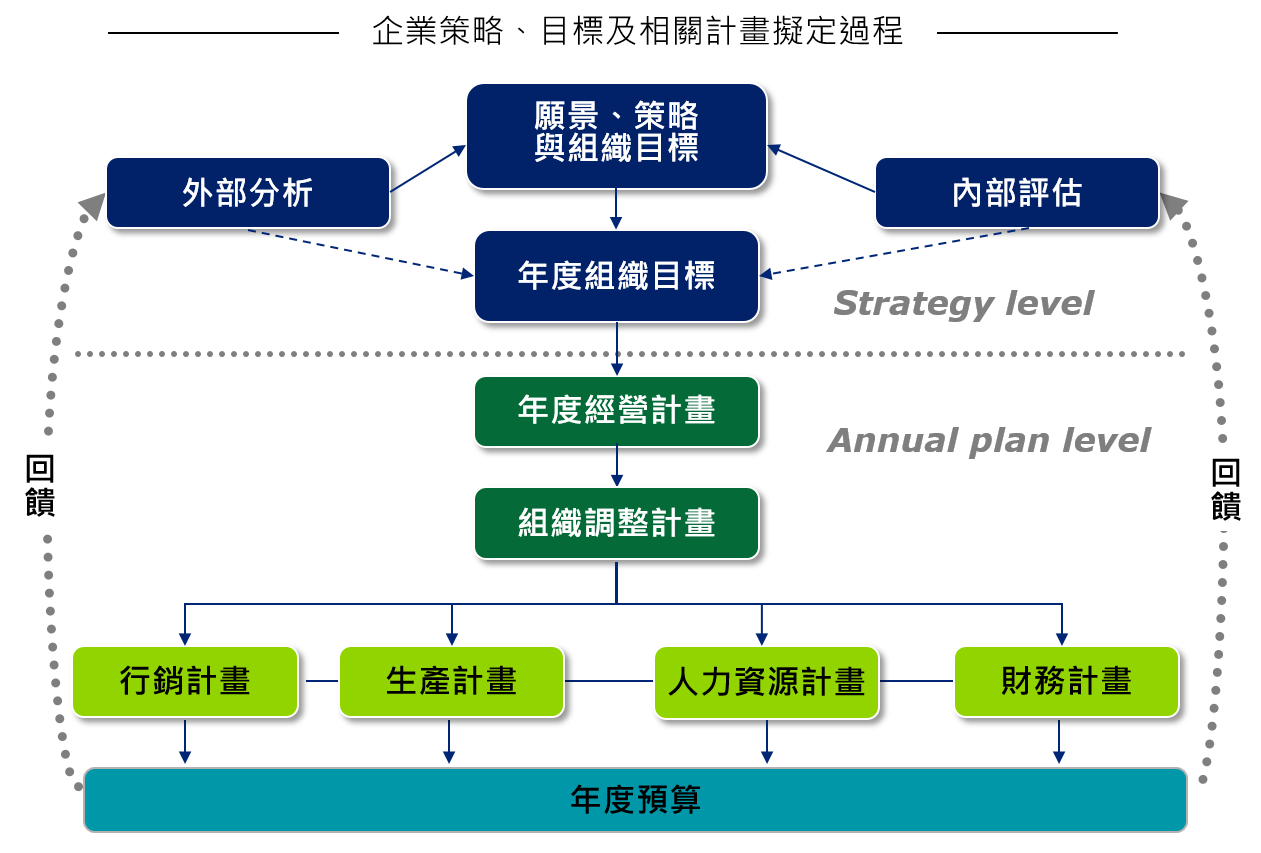
Entering the stage of formulating the annual financial budget, it can be seen from the figure below that the budget formulation is not only related to the company’s finances, but also affects the formulation of the company’s long-term strategy/goals and the formulation of departmental organizational action plans.
 Click the enlarge icon
Best Practice Processes, Budgeting:
Budgeting is time-consuming because there are many levels and units involved, and each unit requires different tasks.
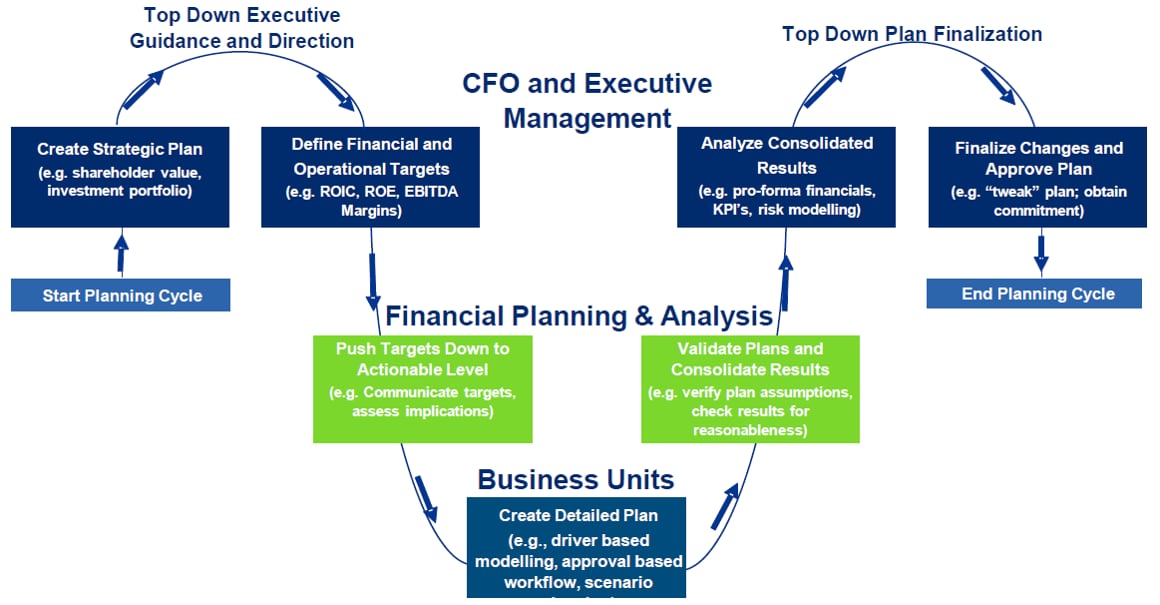
In practice, it is often recommended that companies should include top-down and bottom-up processes, also known as the V-model, which can help companies effectively improve the problem of long budgeting processes.
 Click the enlarge icon
After the process is formulated, it is recommended that enterprises use Driver-Based (Driver-Based) in the form of budgeting.
Why use Driver Basics? Its effective enterprise performance management structure includes key elements such as performance measurement, planned budget forecasting and performance reporting. Too many versions of information will lead to inefficient performance management, so functional organizations should have a consistent strategic goal and use the driver as the common language to integrate all performance management processes.
Once the drivers of operations are linked to financial figures, it can also improve compilation efficiency and analysis flexibility. Some of the drivers themselves are performance management indicators (KPIs) that make budgets and strategies more relevant. Nowadays, budgets are often susceptible to other factors, and the use of a driver basis can further predict the extent of the impact on the budget by simulating changes in drivers, and there is no need to reformulate the entire budget when the budget is revised. Finally, when the difference is analyzed and compared with the actual value, it is better to identify opportunities for improvement.
For example, companies can use the number of people to estimate the cost of salary/meals; It is also possible to estimate the cost of water, electricity, rent, etc., using the number of tsubos, which is the budgeting method on a driver-based basis.
Rolling Forcast
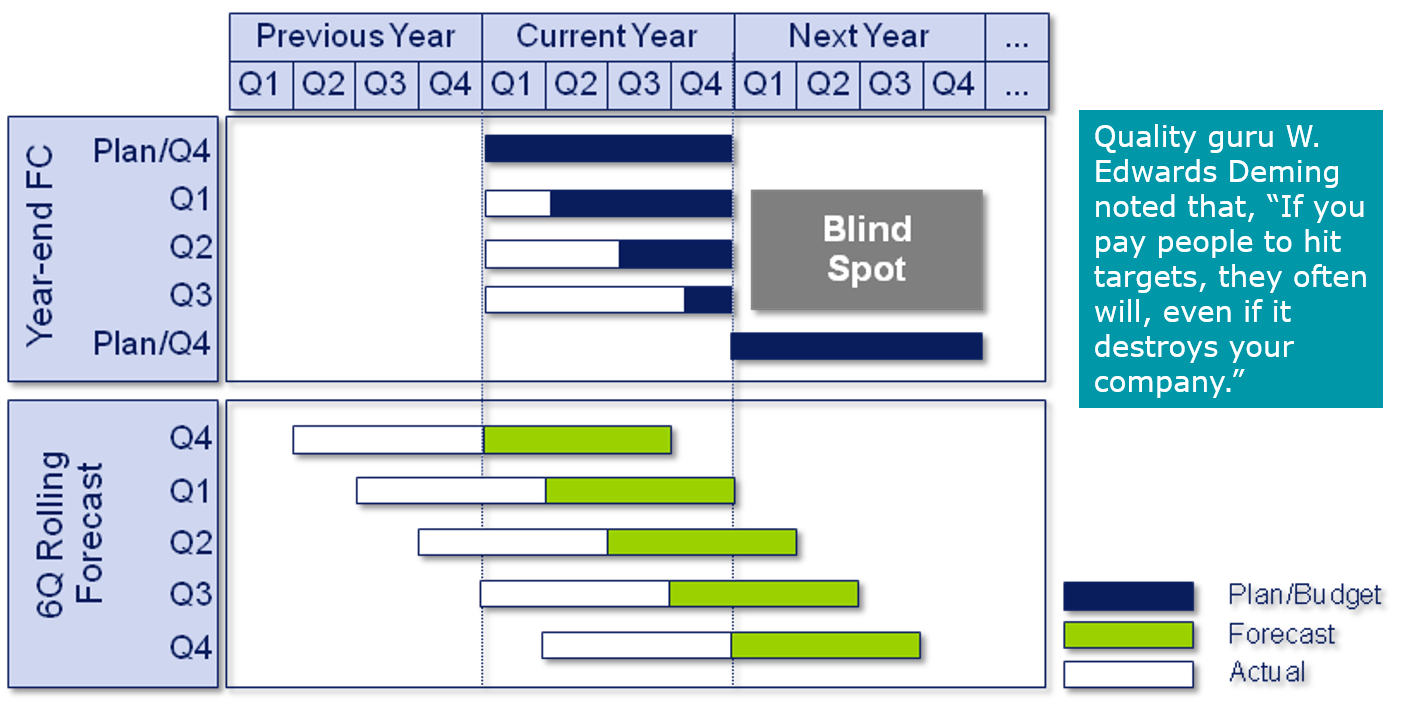
The forecasting method, which suggests that teams can use rolling forcast, also known as the rolling planning method, is a method of regularly revising future plans.
Rolling forecasts provide management with a more realistic perspective on the future through the actual data and data, providing management with a response to a rapidly changing environment. Such an approach would continuously adjust and revise future plans in line with the implementation of the plan and changes in the environment, and move backwards on a period-by-period basis, and would be able to combine short-term and medium-term plans.
Rolling forecasts typically have the following characteristics:
- Continuous forecasting, depending on the characteristics and needs of the industry, is usually carried out on a monthly or quarterly basis
- The forecast period is maintained at a certain level, and is always set at 6Q (18M), 12M, 9M…
- The focus is usually different from Budget, and What-If simulations are often performed for the primary driver
Because of the full consideration of the reality and the company’s development, rolling forecasts are usually more reflective of operations than annual budgets/forecasts, allowing teams and founders to increase visibility into the future, avoid blind spots, improve forecast preparation efficiency and forecast accuracy, and finally apply them to the leadership level to make business strategies more flexible and flexible.
 Click the enlarge icon
Annual budgeting
The four common budgets of enterprises are sales budget, production budget, expense budget and capital budget.
Sales budget: Pay special attention to external and internal impact factors in the preparation process.
The external impact factor should consider the future outlook of the industry, and evaluate the position of the company in the market for the overall industry, and if the overall economic environment and consumer habits/demand trends change, how much will the company’s products/services be affected? At the same time, it is necessary to pay more attention to the quality of competitors’ products/services and prices. Internally, we must think about the product type and nature, life cycle, sales plan, pricing strategy and sales channel strategy.
Production Budget: (also known as Cost of Goods Sold Budget)
In the process of compilation, the following influencing factors should be noted: the characteristics of the industry, the coordination with the company’s long-term and short-term business objectives, the coordination and cooperation between production and marketing, the coordination with the material procurement budget, the manpower demand plan and the equipment plan, and the output budget by year/month; Direct material cost by product, material production input plan, material inventory level plan, material purchase plan, direct material cost plan by product and direct labor cost budget by product.
Cost budget: It is mainly divided into two kinds of expenses, one mainly refers to sales, management, and R&D budget; The other is the employment budget (HC / Salary).
There are several different ways to compile sales, management, and R&D budgets, and managers can let the department make up their own expenses, and the advantage is that the department can control it by itself. If you do not let the department make up the expenses on its own, there are several ways to allocate the expenses on behalf of the department, such as direct attribution (the agency unit assigns the cost to other departments), apportionment (according to the driver, such as: the number of people and the number of pings are allocated to each department), or no apportionment (the account is linked to the unified unit or the whole company).
Human resource budgeting includes headcount calculation and labor cost calculation, and is usually combined with the FTE (Full-time Equivalent) concept to more accurately estimate the budget based on the type of work (full-time, part-time, dispatched). The number of heads is composed of the beginning and the change, and the labor cost is composed of the main labor costs, which are calculated from the number of heads and the average rate.
Budgeting of funds
 Click the enlarge icon
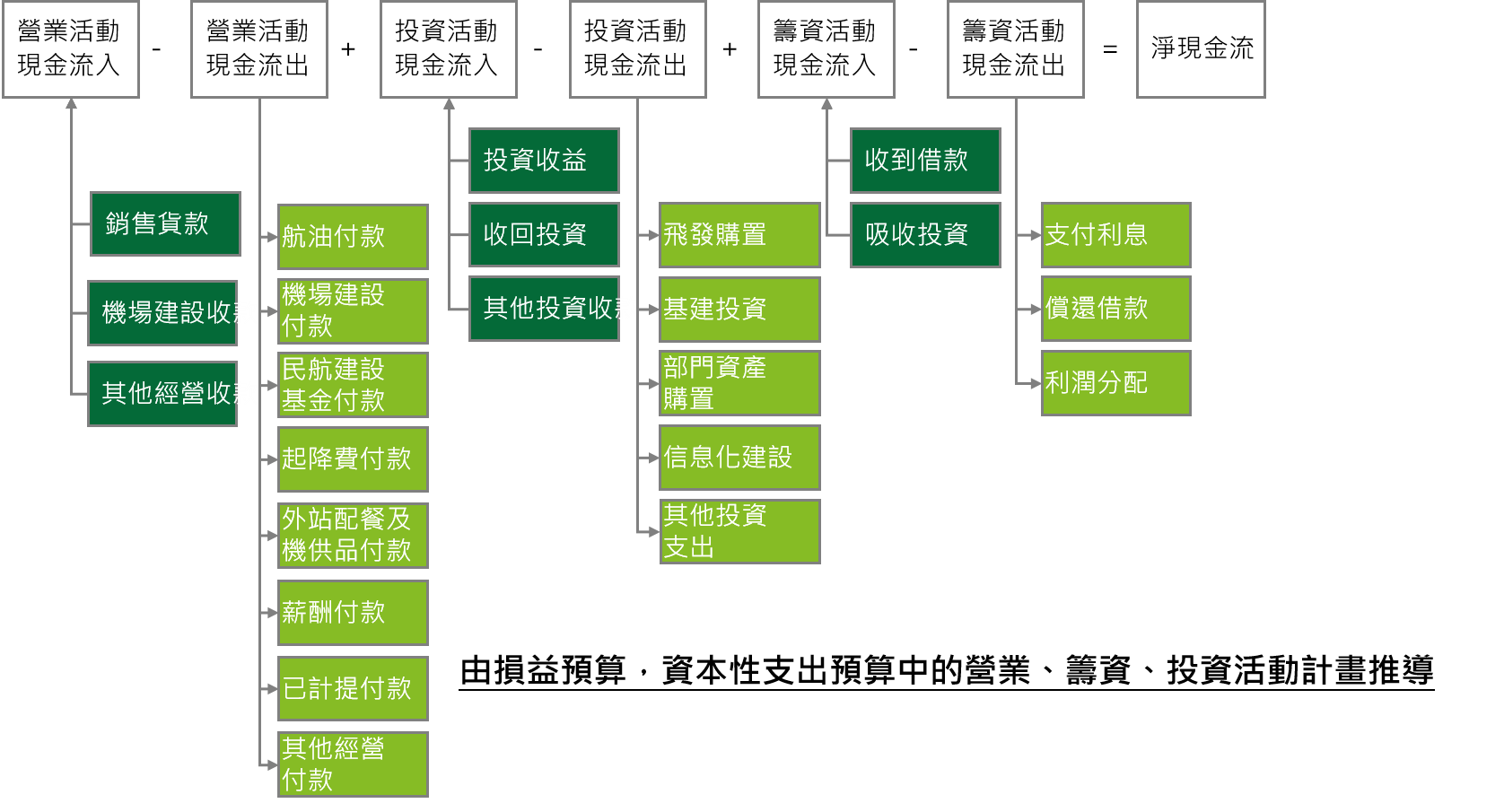
The allocation of short-term resources such as funds is an important part of budgeting; In particular, two items need to be noted, namely the capital flow of material procurement and related capital flows, and the capital outflow of general affairs.
Special attention should be paid to the procurement budget (plan) of material procurement, which is the basis for the preparation of relevant capital budgets, and the working capital generated under the turnover days of accounts receivable should be noted.
He explained that the accounts can be divided into cash and non-cash according to the details. Cash payment subjects select important content analysis characteristics to set cash payment rules, such as: A. Newspaper and periodical expenses: 70% at the beginning of the year, 10% per quarter for other quarters; B. Vehicle usage fee (the comprehensive business department provides vehicle services and is settled quarterly).
Take salary as an example:
1. Wages and subsidies (assuming that the current month is withdrawn and the next month is issued, then the outflow of the current month = the amount withdrawn in the previous month)
2. Labor and health insurance (accrued on a monthly basis and remitted on a quarterly basis, the total amount of the outflow quarter at the end of the quarter or at the beginning of the next quarter)
3. Performance bonus (paid annually)
4. Miscellaneous
* Ending Inventory = Beginning Inventory + Procurement in the Current Period – Consumption in the Current Period,
Or current period purchase = ending inventory (next period consumption * safety stock ratio) + current period consumption – opening inventory.
Budgeting considerations
Once the budget is prepared, it is recommended that the team review whether it is properly prepared using the following principles:
1. The founder and the team should clearly define the company’s strategy, and must compare the actual and budgeted figures to analyze the differences. In addition, are the personnel costs reasonable, can they support the company’s strategy, and if they incur expenses, will there also be relative revenue?
2. In addition to the normal version of the preparation, enterprises can also compile the pessimistic/optimistic version of the budget category, but also confirm each capital expenditure, not to mention the situation of repeated preparation, so the strategy and goal must be confirmed again and again.
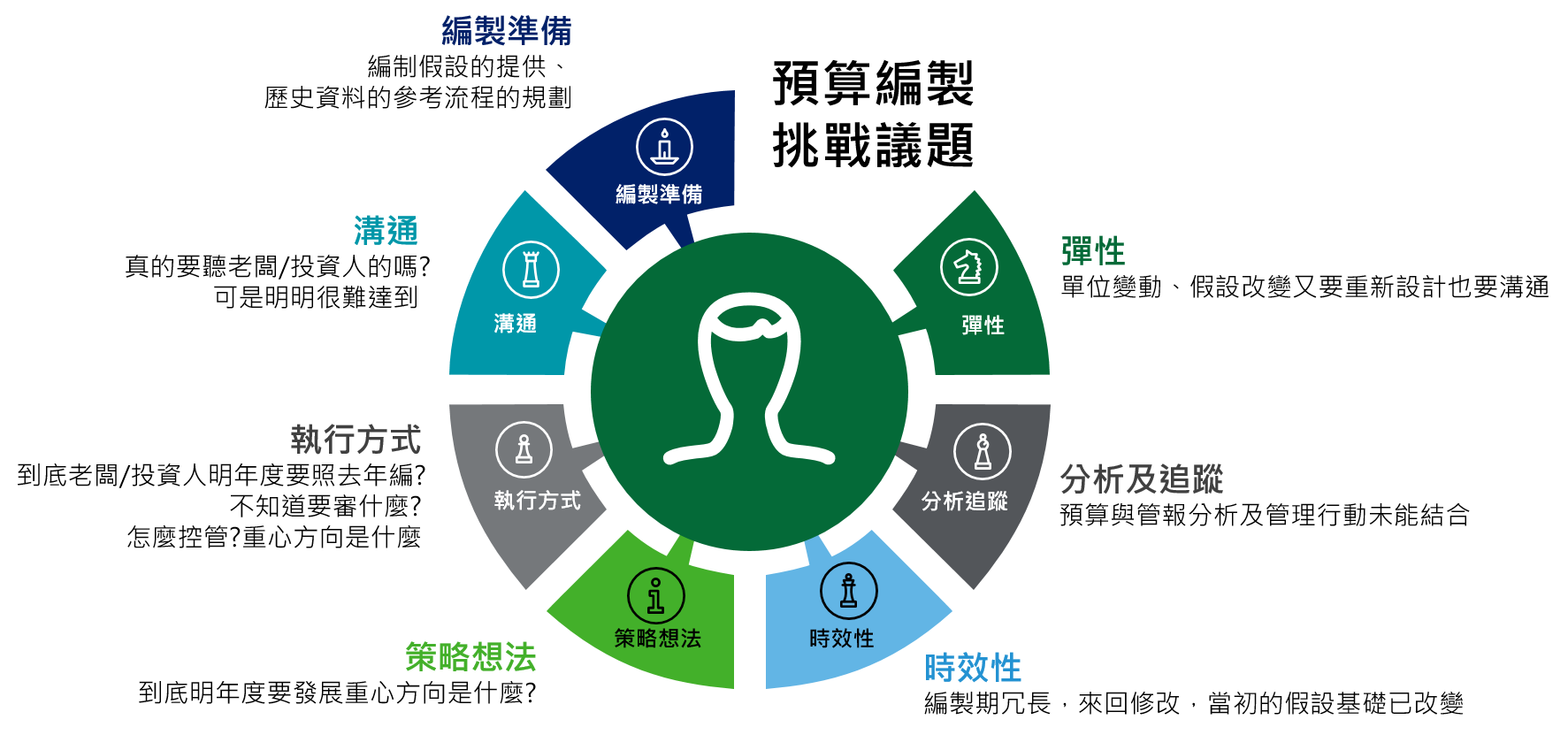
3. No matter how familiar you are with the process of the financial meeting, there are some things that need to be paid attention to repeatedly in addition to numbers, if these challenges and issues can be taken into account and solved, I believe that the company can continue to grow to the next stage in the new year.
 Click the enlarge icon
